How much does a fence cost
Updated 2026-09-04 9 min read
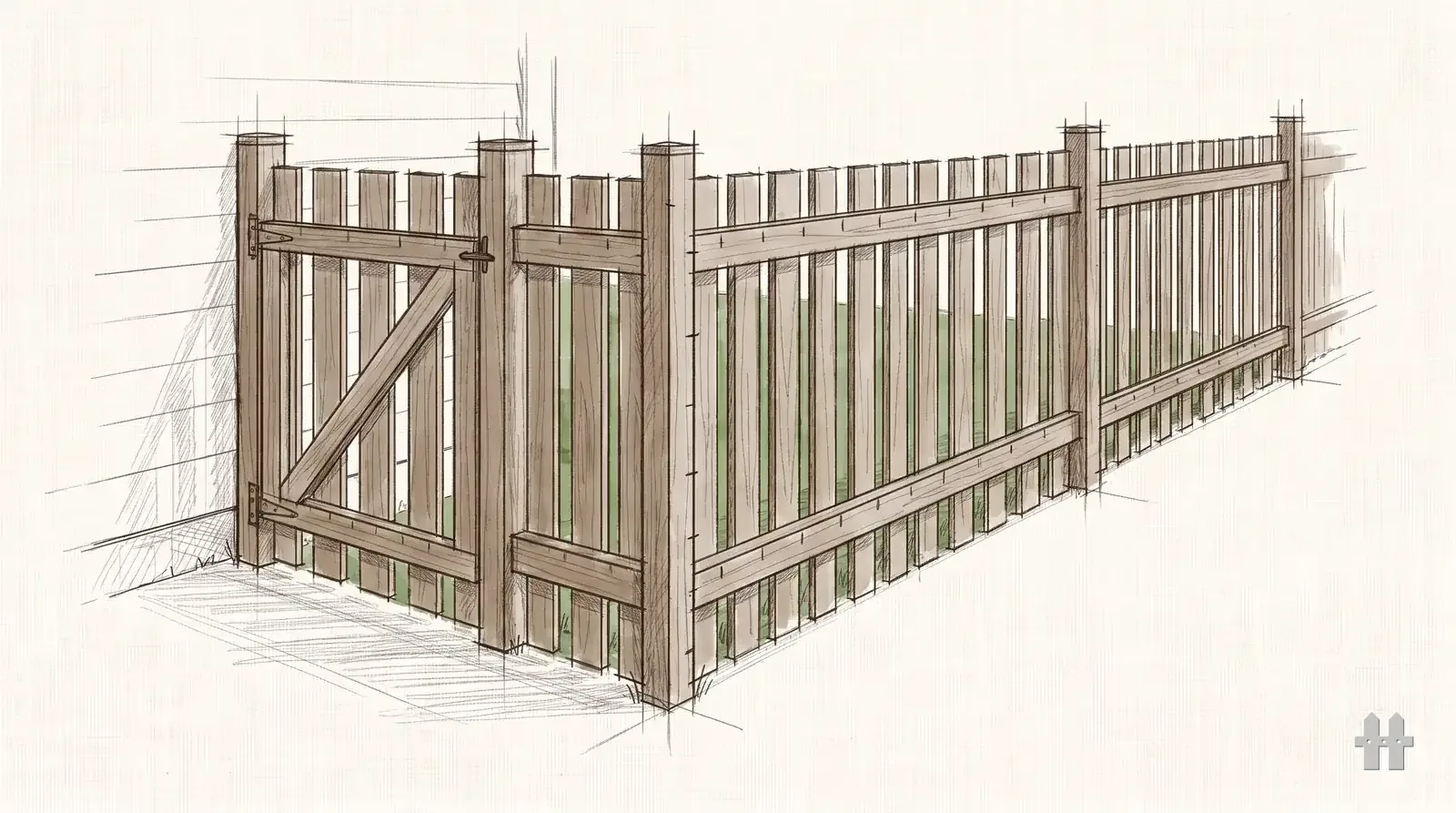
Fences are priced by the foot, and that is the trap
Everyone quotes fence work per linear foot, which makes fences look comparable in a way decks never do. Then two quotes for the same yard come back far apart, because the per- foot figure is an output of a dozen decisions and nobody agreed on them.
Start with the length, since that at least is a fact: walk the line with a wheel or a long tape, or measure it off your plat. Then treat everything else as its own line item rather than folding it into a rate.
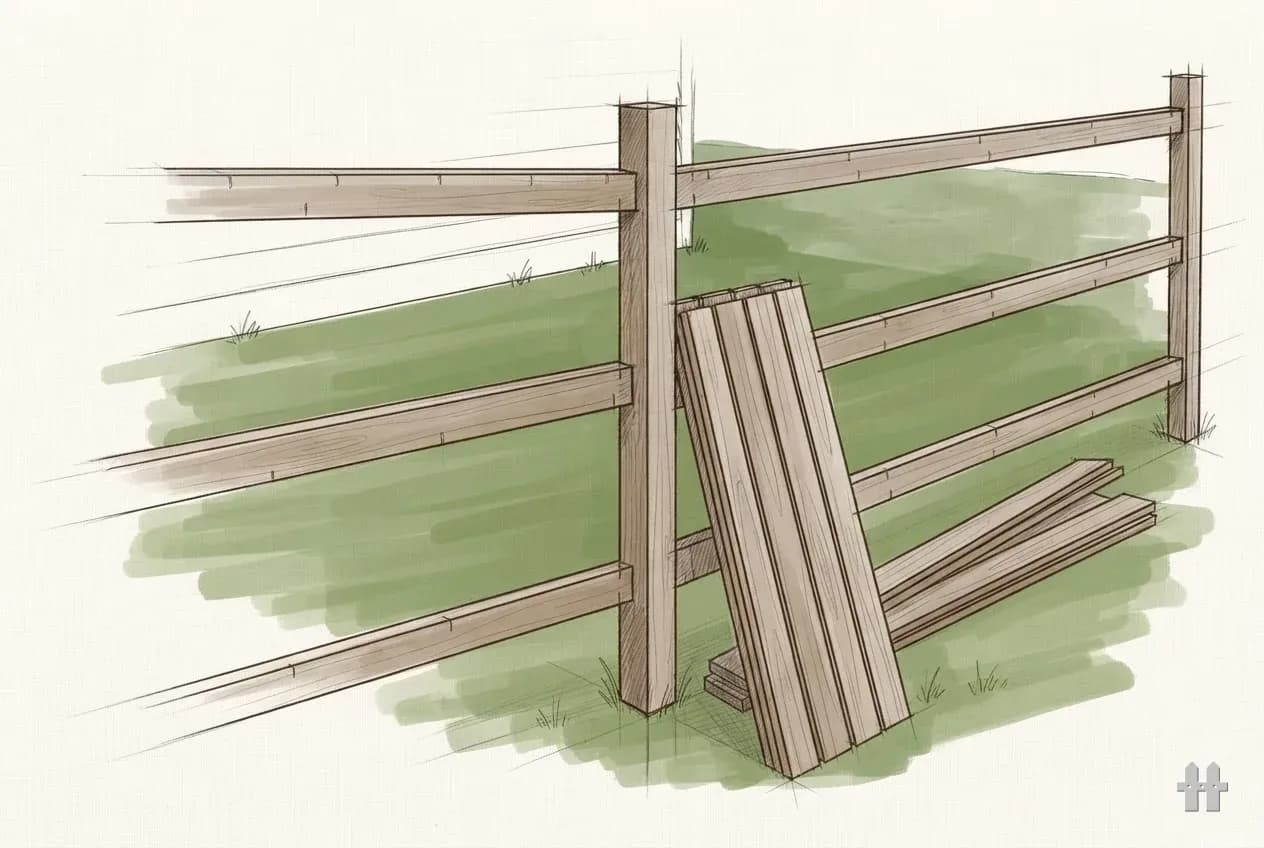
The six drivers
Material. The widest swing by far — chain link, treated pine, cedar, vinyl, composite and ornamental metal are separated by multiples. It also decides the maintenance bill for the next twenty years, which is a different question from the invoice.
Height. Taller means more picket, more rail and — importantly — deeper posts and more concrete, because a taller fence catches more wind. The cost does not rise proportionally with height; it rises faster.
Style and density. A privacy fence with pickets butted tight uses far more board than a spaced picket over the same run. Shadowbox uses more again, because it is boards on both sides.
Terrain. Slope forces either stepped panels or racked panels — both more labour than a flat run. Rock, heavy clay or tree roots turn digging from an hour into a day, and the estimator cannot see any of it from the street.
Corners and ends. Every corner and end post is a heavier post in a bigger hole. A long straight run is cheaper per foot than the same footage wrapped around a complicated yard.
Access. Whether a truck and an auger can reach the line, or whether every post, bag and panel is carried through a side gate by hand.
Material is the biggest of them. Where privacy is not the point, see chain link vs wood fencefor the cheapest real fence, and count its parts with the chain link fence calculator.
Gates are not fence
A gate is not a section of fence that happens to open. It is heavier posts, deeper holes, more concrete, a braced frame and hardware — and the labour to hang it square, which is a different skill from setting a line.
Price every gate as its own line, and price a double drive gate as more than two singles, because it needs a drop rod, a ground sleeve and both leaves hanging true to each other. A quote that swallows gates into the per-foot rate is a quote that will find them later.
The lines people leave off
Demolition and disposal of the old fence — removal, breaking out the old concrete footings, and the dump fee, which is local and not small.
The survey, where the line is genuinely uncertain. Cheaper than moving a finished fence by a wide margin.
Permit and HOA fees, and the time they take before work can start.
Clearing the line — shrubs, roots, an old flower bed, the neighbour's ivy. Somebody has to do it and it is rarely in the quote.
Finishing, if the fence is being stained or sealed. That is its own material and its own days, and on a new cedar fence it is usually deferred to next season anyway.
An old fence coming out is one of those lines. Price it with the fence removal cost calculator.
Building the number
- 01Measure the run and mark the gates. Length, corners, ends, and each gate's width.
- 02Settle height and style. Check the height against the ordinance before you price it, not after.
- 03Lay out the posts. Post count and spacing set the concrete, the holes and a big share of the labour.
- 04Take off the material. Posts, rails, pickets or panels, concrete, fasteners, gate hardware, caps.
- 05Get your own unit prices. Your yard, this week. This is the step that makes the total real.
- 06Add the missed lines. Demolition, disposal, permit, survey, clearing, delivery.
Steps three to five are what the post calculator, concrete calculator and fence cost calculator do. They supply the quantities; you supply the prices.
Prices move weekly and by region. Enter the unit price your yard quoted you — the defaults are round placeholders, not a market average.
Sources
Nothing here is asserted as a current figure. The numbers on this page are arithmetic or nominal lumber sizes — definitions, not claims.
Filed under Costs, codes & permits — 12 tools, guides and comparisons in this pillar.
Next on the pile
Fence cost calculator
Your unit prices, your run, a line-by-line total.
Fence cost per foot
Why the per-foot figure moves so much.
Privacy fence cost calculator
The tall-panel case, priced on its own.
Vinyl fence vs wood fence
Installed cost against ten-year cost.
Do you need a permit for a fence
Settle height and the line before pricing.