Do you need a permit for a fence
Updated 2026-09-04 8 min read
Which rulebook applies
A fence is usually a zoning question rather than a building-code one. That matters because it means the numbers are municipal, not national, and they change across a city boundary you cannot see from the yard.
Some jurisdictions require a permit for any fence, some only above a height, some only in front yards, and some none at all — while still enforcing the height limit if a neighbour complains. "No permit needed" is not the same as "no rules", and an over-height fence with no permit is still an over-height fence.
Ask for the fence section of the zoning ordinance by name. It is a short read and it answers height, materials, setbacks and the good-side rule in one place.
Height, and why the front yard is different
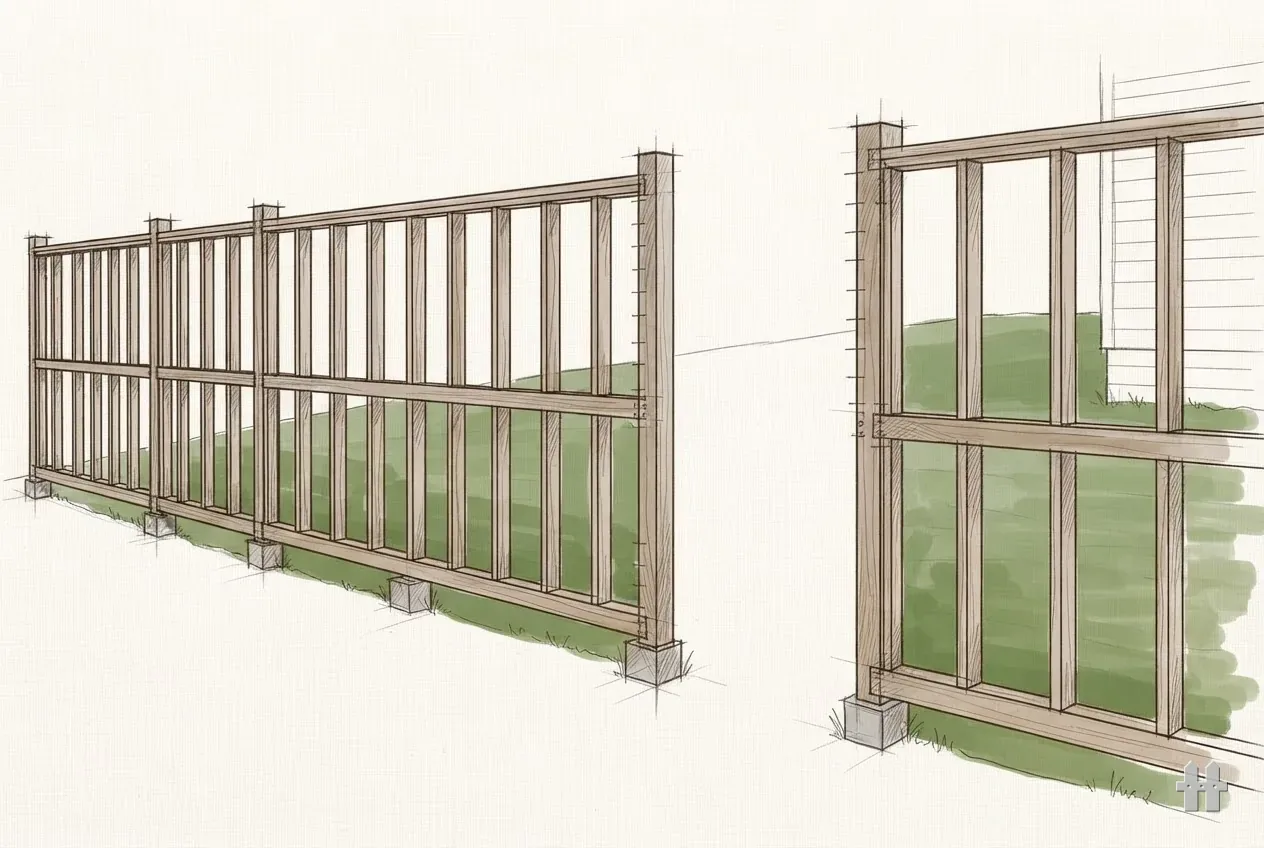
Nearly every ordinance sets a lower limit in front than at the sides and rear — the front yard is a shared streetscape and a tall fence on it changes the street. The rear limit is usually the tall one, and the side yard steps between them at some point along the house.
Three details do most of the arguing. Where the front yard ends is defined in the ordinance and is often the front building line, not the corner of the house. How height is measured matters on a slope — usually from grade at the fence, which means a stepped fence on a hill has a different height at every panel. And whether the post caps and lattice count toward the height; often they do.
Building to the limit exactly leaves nothing for a grade change or a taller cap later. Build an inch or two under it.
Corner lots and sight triangles
On a corner lot there is a triangular area at the intersection where nothing may block a driver's view — the sight triangle, or vision clearance area. Inside it, fences, hedges and even tall planting are limited to a low height regardless of what the rest of the yard allows.
This catches people constantly, because the corner is exactly where a privacy fence feels most wanted. The same rule can apply where a driveway meets the sidewalk. It is a safety rule and it does not get variances easily — design the run around it rather than hoping.
Pool barriers are a separate rule
If the fence is enclosing a pool or hot tub, it stops being a zoning question and becomes a life-safety one, with its own requirements: minimum height, no climbable horizontal members on the outside, limits on gaps at the bottom and between members, and self-closing, self-latching gates that swing away from the pool with the latch out of a child's reach.
These are separate from and stricter than the general fence rules, they are inspected, and they are the rules most worth getting in writing before you buy material. The gate hardware in particular is not the standard latch.
The property line question
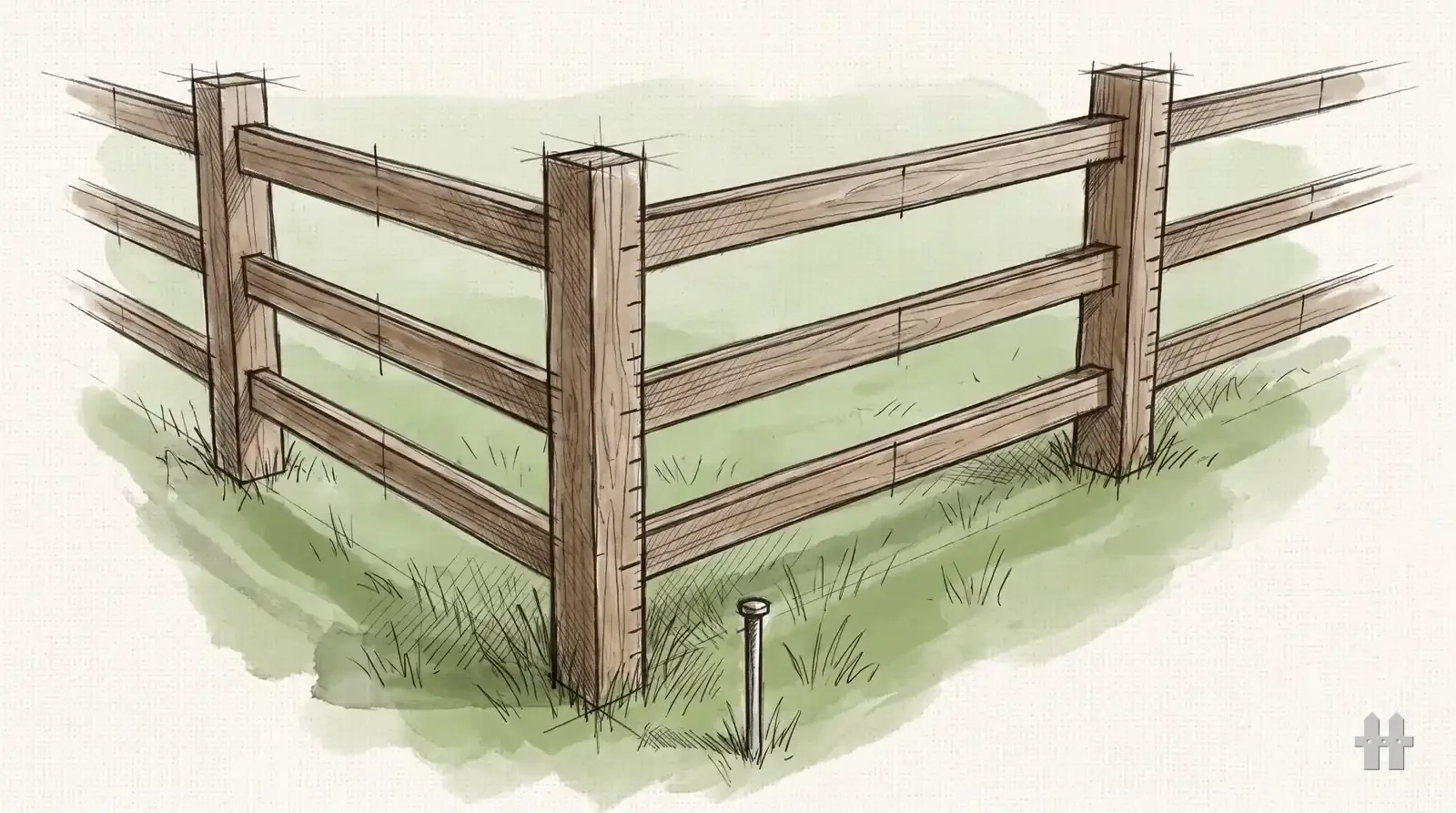
Where exactly the line runs is the question that turns a fence into a dispute. Do not take it from an existing fence, a hedge, or where the mowing has always stopped — any of those can be decades of drift.
Find the survey pins, or have a surveyor set them. It is a real cost, and it is far cheaper than moving a finished fence. Many builders then set the fence a few inches inside their own line, which keeps every post, footing and future repair on their own ground and removes the argument permanently.
Then there is the good-neighbour rule: many ordinances require the finished face — rails and posts hidden — to point outward, at the street or the neighbour. Check before you decide which way the pickets go, because reversing a built fence is a rebuild.
The HOA, which is not the city
An association's covenants are a separate approval running on their own timeline, and they are usually more specific than the city: permitted materials, permitted colours, permitted styles, sometimes a single approved design for the whole development.
A city permit does not satisfy the HOA and HOA approval does not satisfy the city. Get both, in writing, before material arrives. An HOA can compel removal of a compliant fence that broke a covenant, and that is the most avoidable money on this page.
Code requirement
Every number here — height, setback, sight triangle, pool barrier — is set locally. Your jurisdiction may amend the model code or adopt a different edition. Confirm with your building department before you cut.
Sources
Nothing here is asserted as a current figure. The numbers on this page are arithmetic or nominal lumber sizes — definitions, not claims.
Filed under Costs, codes & permits — 12 tools, guides and comparisons in this pillar.
Next on the pile
How deep should fence posts be
Once the line is settled, the holes are next.
Fence post calculator
Post count and spacing for the approved run.
How much does a fence cost
What moves the number, and how to build your own.
Deck permit requirements
Same counter, a structural review instead.
Aluminum fence vs wood fence
Pool barrier rules and the open fence that meets them.