Fence building
4 tools · 3 guides · 4 comparisons
Post depth, spacing and concrete, panels and gates — the fence work that gets measured before anything gets dug.
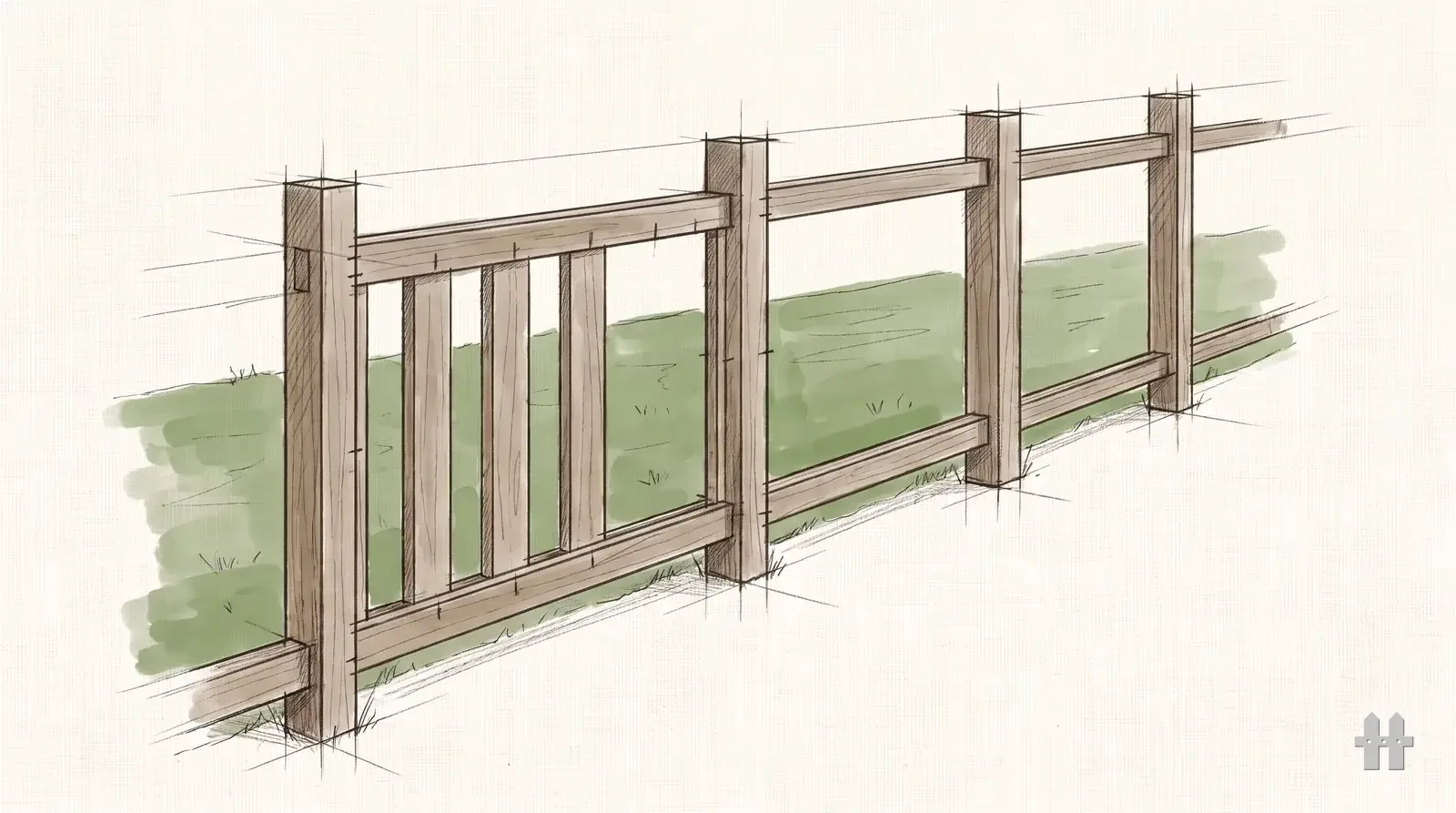
How this pillar fits together
A fence is mostly posts. Pickets and panels get the attention, but a fence fails where its posts meet the ground: set too shallow, they lean in the first hard winter or the first big wind; set in concrete that holds water against the wood, they rot at grade years before the boards wear out. The pages here are about getting that part right before anything else gets bought.
The order is the same for every material. Decide what the fence is for (containment, privacy or a boundary line), check the height and setback rules where you build, then lay out the run, count the posts, size the holes and work out the concrete. Gates are their own small structure with their own hardware and bracing, and they deserve a heavier post than the line around them.
Material changes the details, not the order. Wood fences are posts, rails and pickets; chain link is terminal posts, line posts, a top rail and fabric; aluminum and vinyl come as panels made to fixed lengths, which means the post spacing has to match the panel to the inch. The comparisons in this pillar put those materials side by side on privacy, upkeep, wind and service life.
Start here
Tools
Fence post depth calculator
How deep to set a post for its height, its role and your local frost line.
Fence post calculator
Post count, spacing and rail lengths for a run of any length.
Fence post concrete calculator
Bags of concrete per hole and for the whole run, by hole size.
Chain link fence calculator
Posts, rail, fabric rolls, bands, ties and gates for a chain link run, priced with your numbers.
Guides
How deep should fence posts be
The one-third rule, the frost rule, and which one actually governs.
Fence gate hardware
Hinges, latches and the bracing that stops a gate sagging in year two.
How long does a fence last
Life by material, why posts fail at grade, and when to repair or replace.
Comparisons
Cedar vs pressure treated fence
Cost per foot, service life and where a mixed build beats either one.
Vinyl fence vs wood fence
Installed cost, maintenance and what each one looks like at year ten.
Chain link vs wood fence
Price per foot, privacy and the jobs where chain link still wins.
Aluminum fence vs wood fence
Privacy, slopes, pool barrier rules, wind and rot — the open fence against the built one.
11 pages in this pillar