Fence cost per foot
Updated 2026-09-04 7 min read
What "per foot" actually means
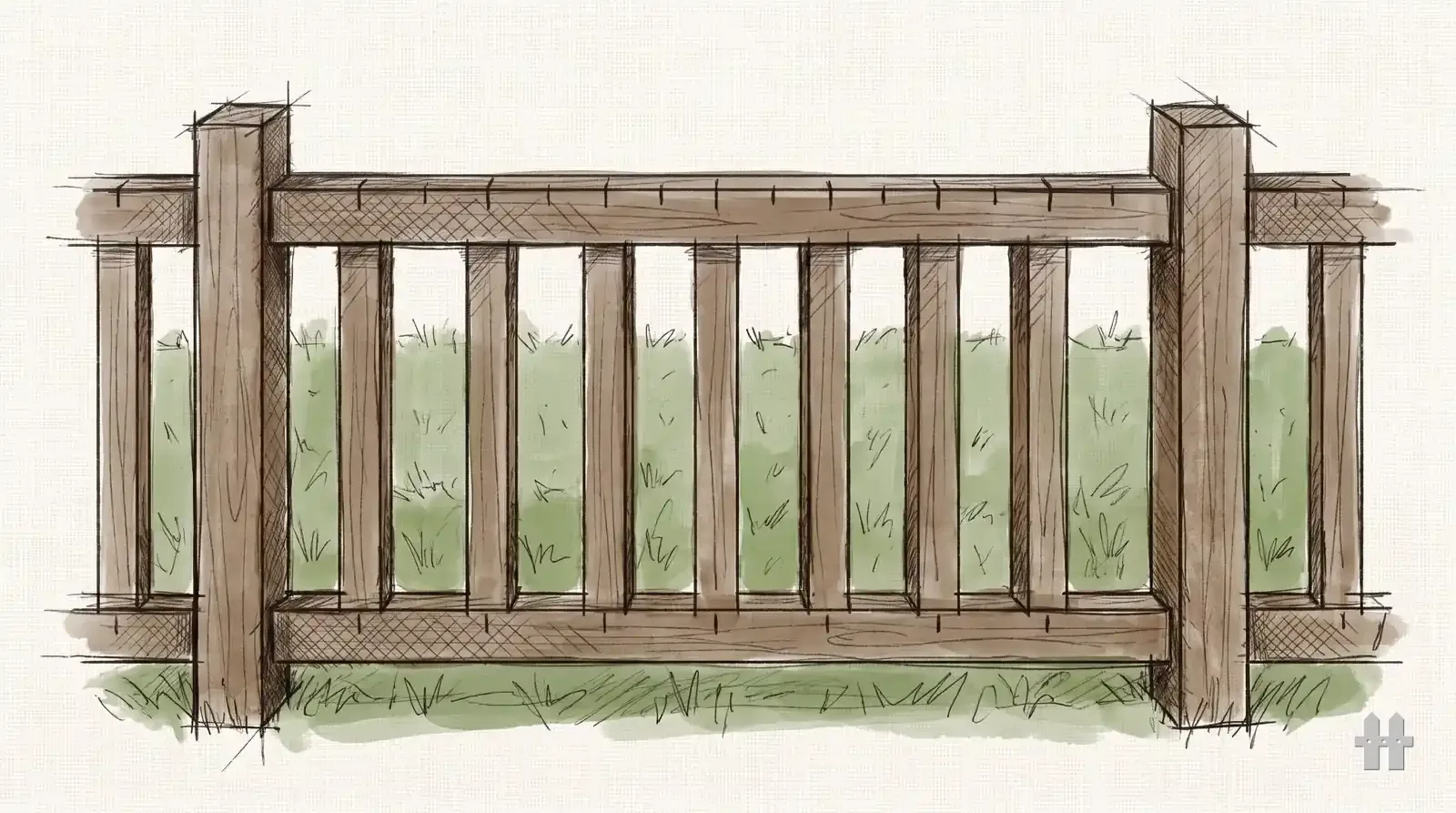
A fence is not built by the foot, it is built by the bay — the section between two posts. Everything real is per bay: two rails, a set of pickets, a share of a post, a share of a hole full of concrete. The per-foot figure is that bay cost divided by the bay width, and it is a reporting convention rather than how anything is bought.
That is why it moves so much. Change the post spacing and the per-foot number changes without a single price changing, because the same post is being spread over more or less fence.
The formula
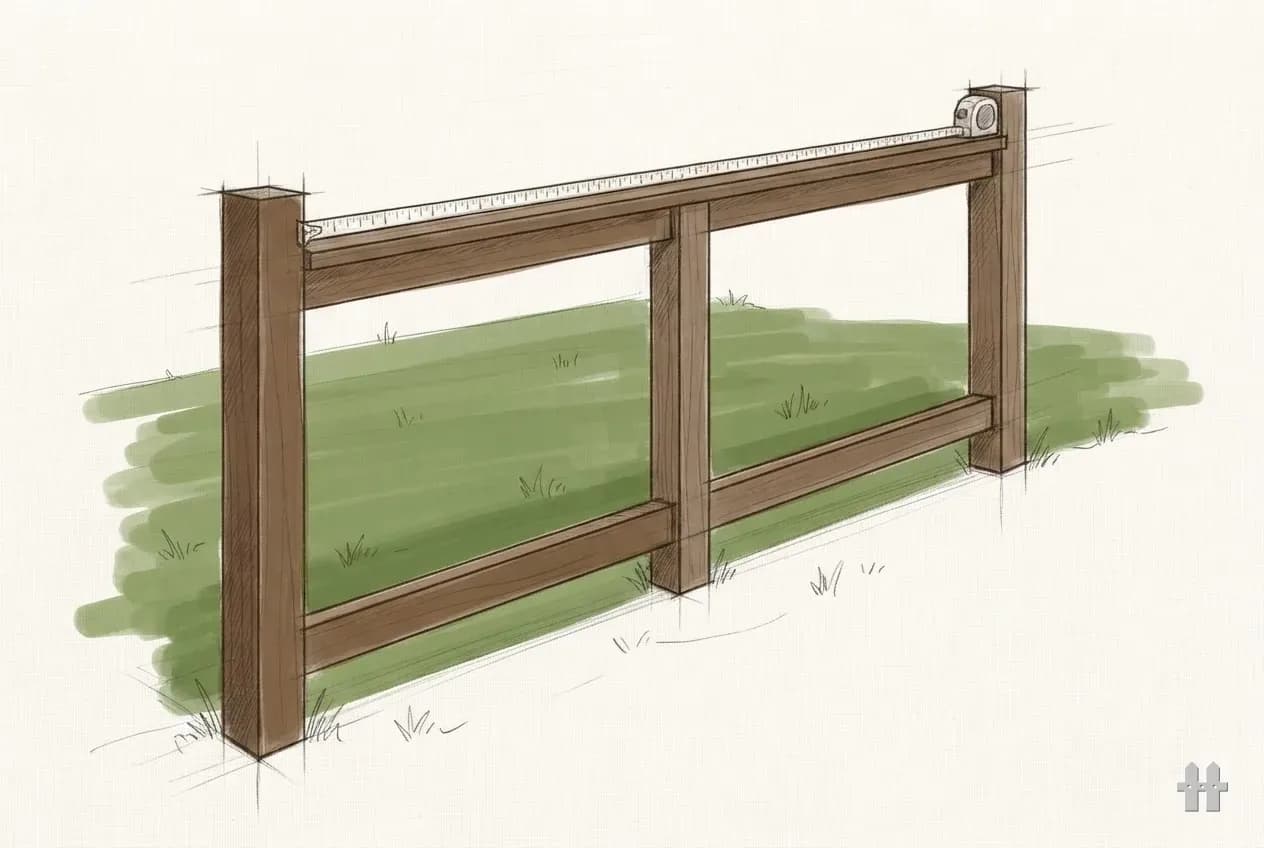
Build a bay, then divide. For one bay at your spacing:
| Component | Quantity for one bay |
|---|---|
| Pickets | Bay width ÷ picket coverage (spacing included if the style is spaced) |
| Rails | 2 or 3 × bay width, in the rail stock you are buying |
| Post | One post per bay (the run has one extra at the end) |
| Concrete | Hole volume minus post volume, in bags, for one hole |
| Fasteners | Screws or nails for the pickets and rail connections in that bay |
| Labour | Dig, set, hang rails, fix pickets — per bay, at your local rate |
Sum the bay, divide by the bay width in feet, and you have a per-foot number that is actually yours. The fence cost calculator does exactly this arithmetic — you supply the six prices.
Why two quotes differ
When per-foot quotes come back far apart, one of these is almost always the reason:
Different post spacing — see above; it moves the number without moving any price.
Different picket density — a privacy fence with boards butted tight uses considerably more board than a spaced picket over the same run, and shadowbox more again.
Gates folded in or not — one quote has spread the gates across the whole run, the other has them on their own line. This makes the honest quote look dearer.
Demolition folded in or not — same trick, same effect.
Different post depth — a contractor pricing to the frost line and one pricing to two feet are not quoting the same fence, and it is invisible in the per-foot number.
Style is one of the biggest reasons. See the fence stylesside by side before comparing two per-foot numbers.
Using the number
Per foot is a good tool for two jobs: comparing your own options against each other — cedar against treated, six feet against four, 6-foot bays against 8 — and sanity-checking a quote once you know what is inside it.
It is a bad tool for planning a budget from someone else's article, because a figure without its assumptions is not a price, it is a rumour. Spend twenty minutes with your own yard's numbers and you will have something worth arguing from.
Prices move weekly and by region. Enter the unit price your yard quoted you — the defaults are round placeholders, not a market average.
Sources
Nothing here is asserted as a current figure. The numbers on this page are arithmetic or nominal lumber sizes — definitions, not claims.
Filed under Costs, codes & permits — 12 tools, guides and comparisons in this pillar.
Next on the pile
Fence cost calculator
The formula on this page, with your prices in it.
How much does a fence cost
The whole-job view, including the missed lines.
Fence post calculator
Post count and spacing — the denominator here.
Chain link vs wood fence
Where the per-foot gap between materials comes from.
Fence removal cost calculator
The tear-out line most per-foot quotes leave off.