Decking board width
Updated 2026-09-04 6 min read
Nominal is not actual
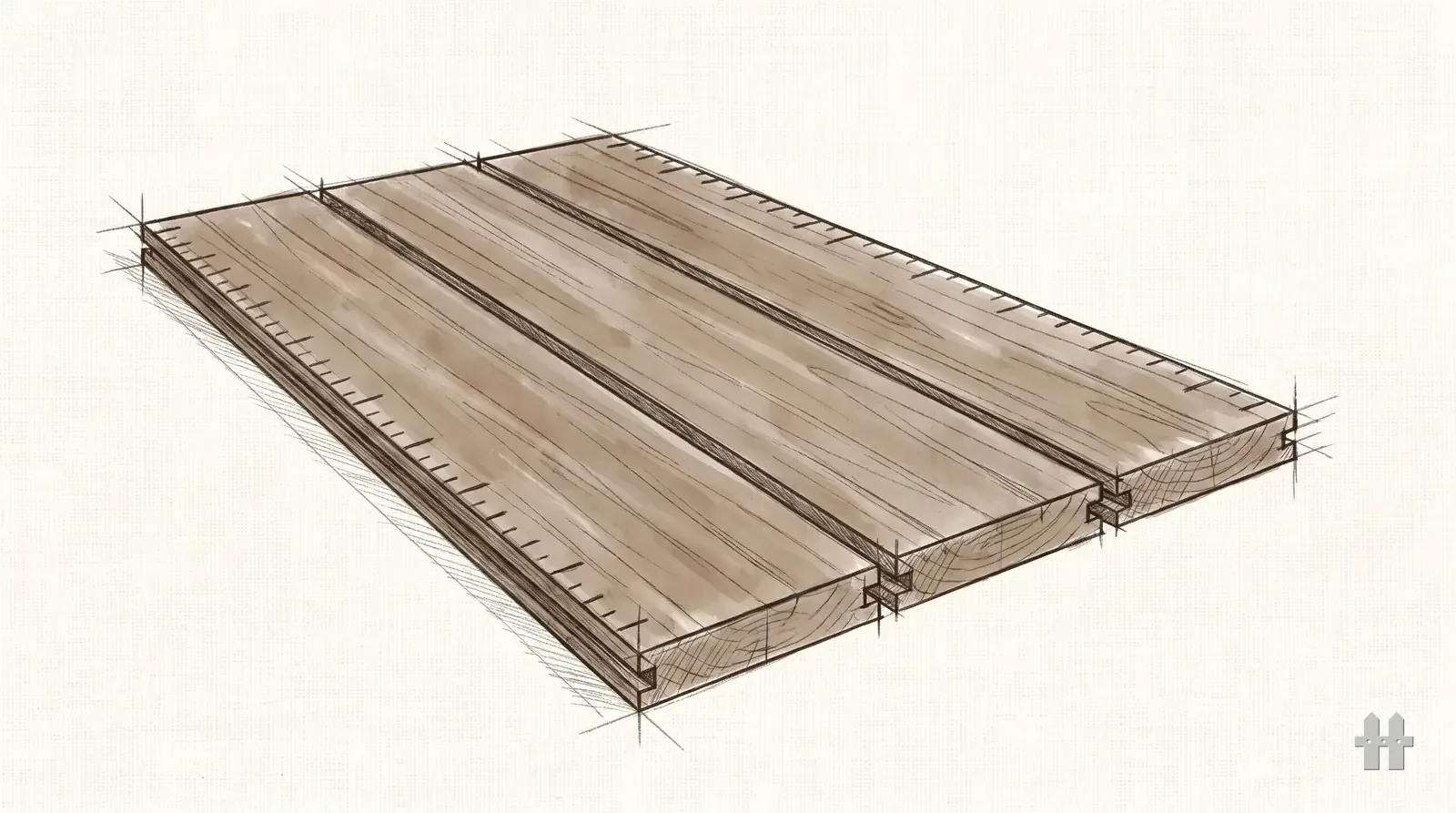
A "6-inch" deck board is not six inches wide. Nominal 6-inch stock — whether it is 5/4×6 or 2×6 — lays a face of 5.5", and nominal 4-inch lays 3.5". Ordering from the nominal number is how people end up two boards short at the far edge.
Add the gap between boards and the effective coverage drops again. At a quarter-inch gap each 6-inch board covers about 5.75" of deck. That is the number to divide your deck width by, and it is what the board calculator uses.
Thickness matters more than width
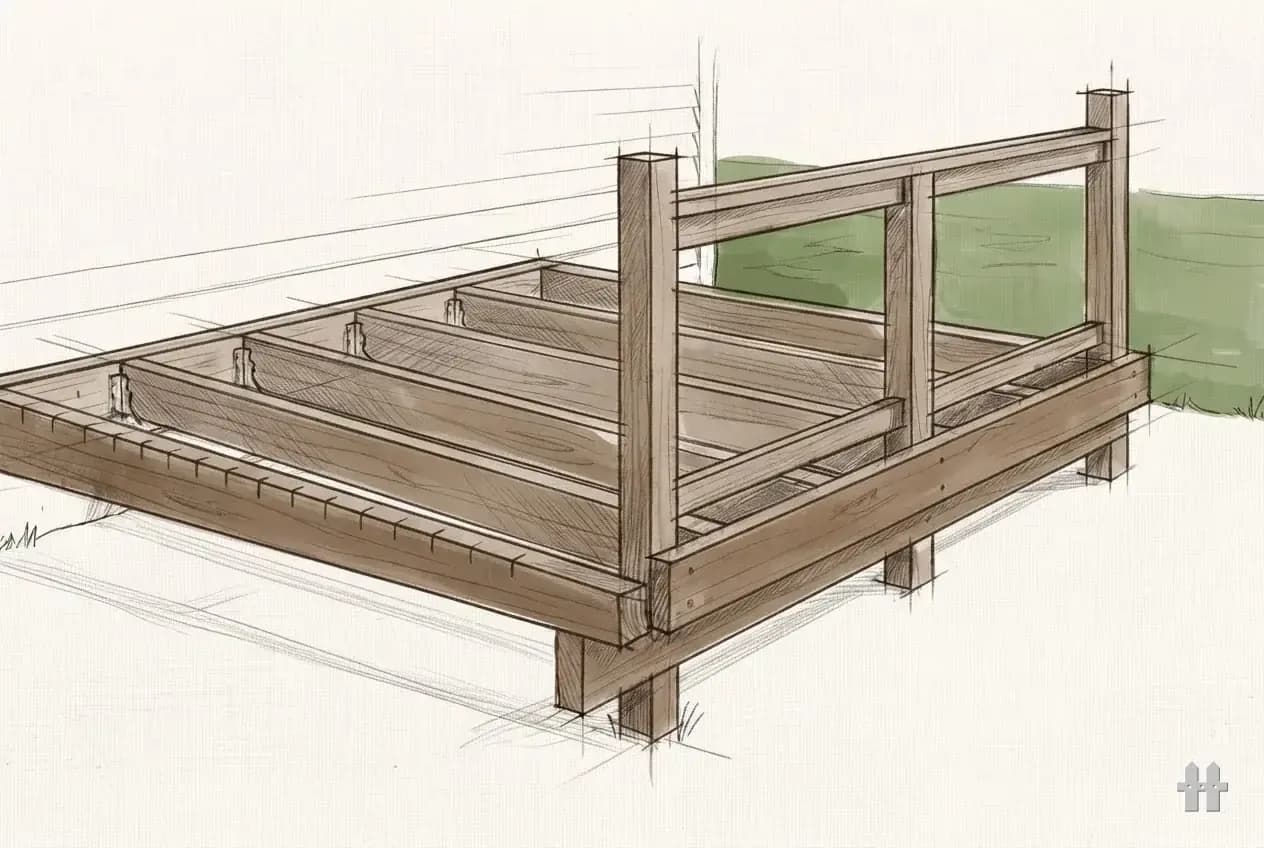
The genuinely consequential choice is not 4 versus 6 inches, it is 5/4 versus 2×. Nominal 5/4 stock is a little over an inch thick; 2× stock is about an inch and a half. Half an inch does not sound like much and it changes three things.
Stiffness between joists. Thicker stock tolerates wider joist spacing. Thinner stock flexes underfoot at spacings 2× would carry comfortably — which is a spacing decision, not a decking one.
Weight and cost. 2× is heavier to handle and costs more per foot.
Fastening. Screw length and the hidden-fastener systems available differ between the two. Check the fastener before committing to the stock, not after.
Composite and PVC boards have their own thicknesses and their own maximum joist spacings, and those are set by the manufacturer's instruction, not by the lumber convention. Read the installation guide before you frame.
How the boards are held down matters as much as their size; see deck screws vs hidden fasteners.
What width does to the board count
Narrower boards mean more of them, and that is the real cost of the look. Across a 12-foot deck at a quarter-inch gap you need about 26 nominal-6 boards, or about 39 nominal-4 boards.
More boards is more of everything: more fasteners, more linear feet of edge to seal and stain, and — the one that bites — more labour. Every board is a cut, a gap set and a row of screws. Going narrow on a big deck is a meaningfully longer job.
What it does to the look
Narrow boards read finer and more traditional, and they make a small deck look larger because the lines are closer together. They are also the safer choice in species prone to cupping, since a narrow board has less width across which to cup.
Wide boards read calmer and more modern, with fewer lines across the eye. On a large deck the reduced board count is a real saving in labour. The risk is cupping: a wide board with a poor grain orientation moves more, and you see it.
Mixing widths deliberately — a wide field with a narrow picture-frame border, or alternating widths — is a design choice that reads as intentional when the joint plan supports it, and as a mistake when it does not. Plan it with the butt-joint layout in front of you.
Choosing
Work backwards. Decide the joist spacing your decking needs, check it against what the frame can span, then pick a width for the look and price it as a board count rather than a per-foot rate. Width is the cheapest thing on this page to change on paper and one of the most annoying to change once the lumber is on site.
And whatever you pick, buy from one supplier in one delivery where you can. Board width and colour vary between mill runs, and a deck finished from two batches shows the line.
Sources
Nothing here is asserted as a current figure. The numbers on this page are arithmetic or nominal lumber sizes — definitions, not claims.
Filed under Materials & finishes — 11 tools, guides and comparisons in this pillar.