How deep should fence posts be
Updated 2026-09-04 7 min read
Two rules, and how they interact
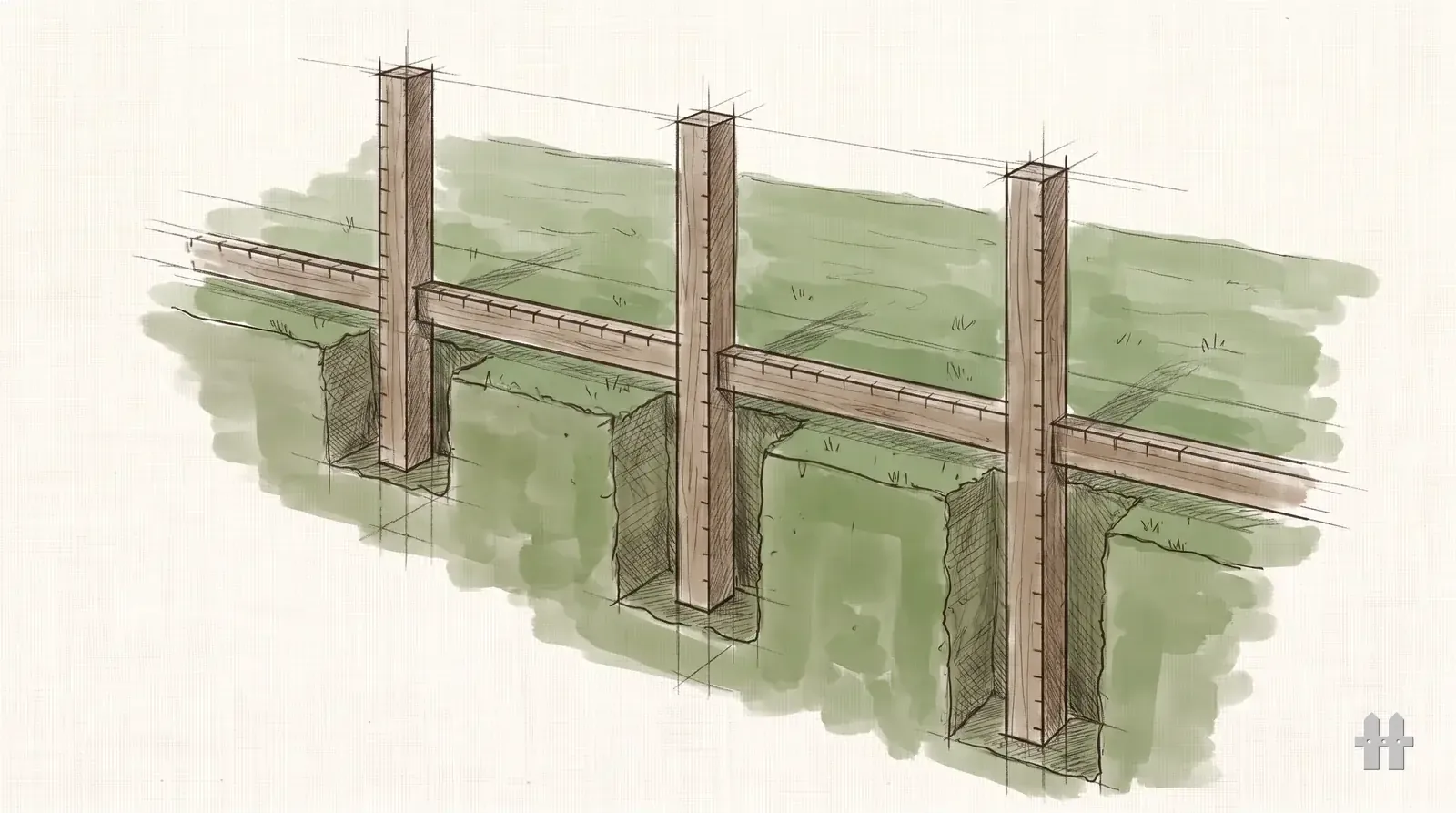
The one-third rule is the trade convention: bury about a third of the post's total length. A fence post is a cantilever — wind pushes on the panel and the buried length is the only thing resisting it — so a taller fence needs a deeper post simply to stand up. This is a stability rule.
The frost rule is a movement rule. Where the ground freezes, soil holding water expands and lifts anything sitting inside the frozen layer. A post bottoming above the frost line gets jacked upward a little each winter and never fully settles back. The fence goes wavy along the run, and the gate stops latching.
They are not alternatives. You dig to whichever is deeper. In a warm climate that is nearly always the one-third rule. In a cold one, frost usually wins on a short fence and the two land close together on a tall one. Your local frost depth comes from the building department, not from a map on the internet.
Hole diameter matters as much as depth
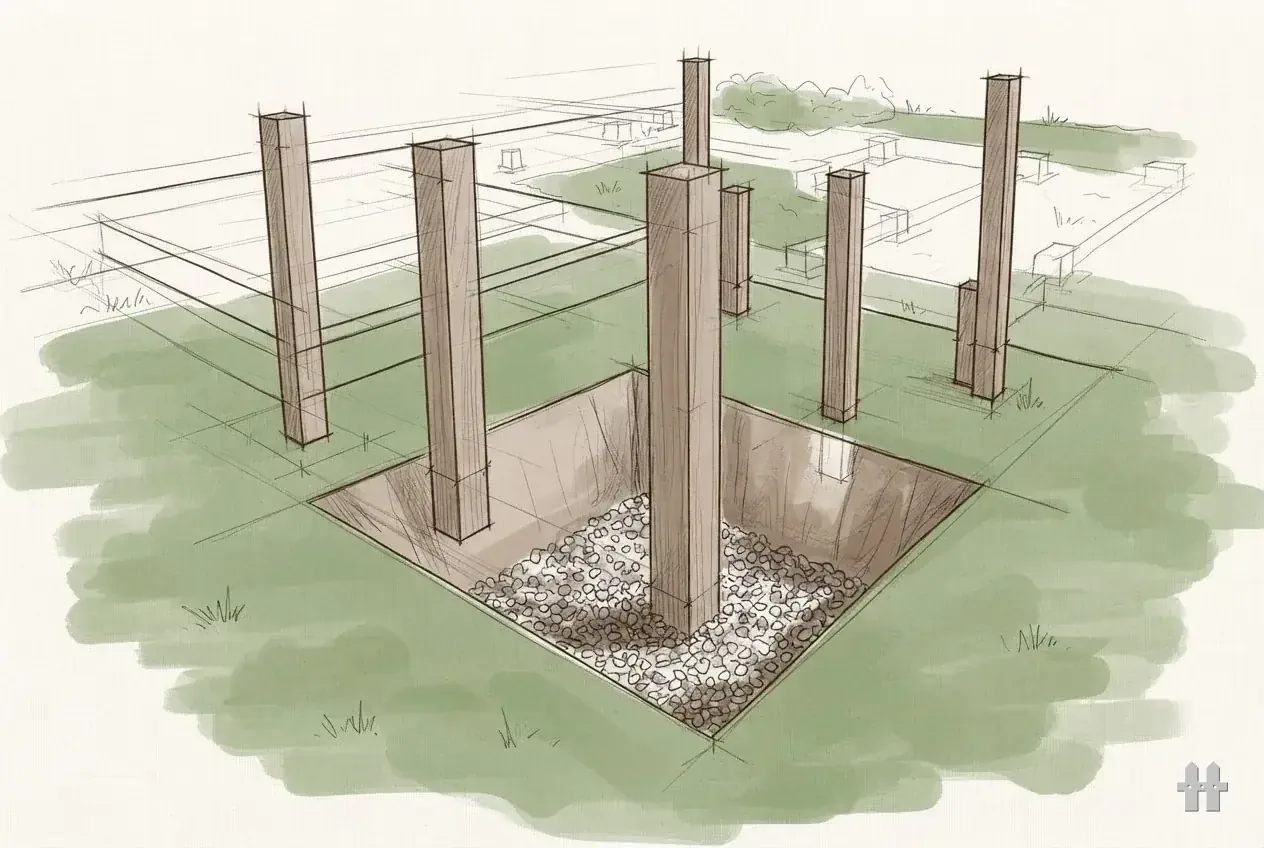
A deep, narrow hole is a bad hole. The usual guide is a diameter about three times the post's width, which gives a concrete collar thick enough to spread the bending load into the soil instead of concentrating it on a thin shell of concrete that cracks.
The trade-off is concrete. Widening a hole increases volume with the square of the diameter, so a small increase in width is a large increase in bags — which is exactly what the concrete calculator is for. Size the hole properly, then find out what it costs, rather than sizing the hole to a bag count you guessed.
What goes in the bottom
A few inches of compacted gravel under the post, before any concrete. It gives water a path away from the end grain instead of letting it stand in a concrete cup, and the end grain is where a wood post rots first — every time, from the bottom up.
Then the concrete collar around the post, crowned above grade and sloped away so surface water runs off rather than pooling at the timber. A flat or dished top holds water against the post and undoes the gravel.
Some builders set posts in compacted gravel alone with no concrete at all. It drains better and a post can be pulled and replaced without breaking out a footing. It needs real compaction in layers to hold a tall fence, and some jurisdictions have a view on it — worth asking about locally.
Gate and corner posts are different
A gate post carries a cantilevered weight that swings, slams and gets leaned on. It is the post that fails and it is the failure everyone sees, because a leaning gate post is a gate that drags and does not latch.
Go bigger and deeper on both gate posts: a heavier post section, a wider hole, more depth. On a wide or heavy gate, some builders brace the hinge post back to the next line post below grade. It is a small amount of extra work at the only point on the fence that moves ten thousand times.
Corner and end posts take the pull of the rails from one side only, so they also want more than a line post — same principle, smaller margin. The gate hardware guide covers the other half of keeping a gate square.
Setting them
Set the two end posts first, string a line between them at the top, and set every post in between to that string. Setting posts one at a time off the previous one accumulates error, and by the far end the run bows visibly.
Plumb each post on two adjacent faces, not one, and brace it before the concrete goes in. Check plumb again after the last shovel of concrete — the act of filling moves posts, and you have about a ten-minute window to fix it.
Then leave them. Hanging rails on posts that have not cured levers the collars and puts a permanent lean in the run. Let the concrete take a proper set before anything loads it.
Code requirement
Frost depth and any local footing requirement come from your jurisdiction; a pool barrier fence has stricter rules again. Your jurisdiction may amend the model code or adopt a different edition. Confirm with your building department before you cut.
Sources
Nothing here is asserted as a current figure. The numbers on this page are arithmetic or nominal lumber sizes — definitions, not claims.
Filed under Fence building — 11 tools, guides and comparisons in this pillar.
Next on the pile
Fence post depth calculator
Depth from post height, soil and your frost line.
Fence post concrete calculator
Bags per hole once the hole is sized.
Fence post calculator
How many posts the run needs, and where.
Deck footing depth
The same frost question under a deck.
How long does a fence last
Why the post at grade decides the whole fence.