How much does a deck cost
Updated 2026-09-04 9 min read
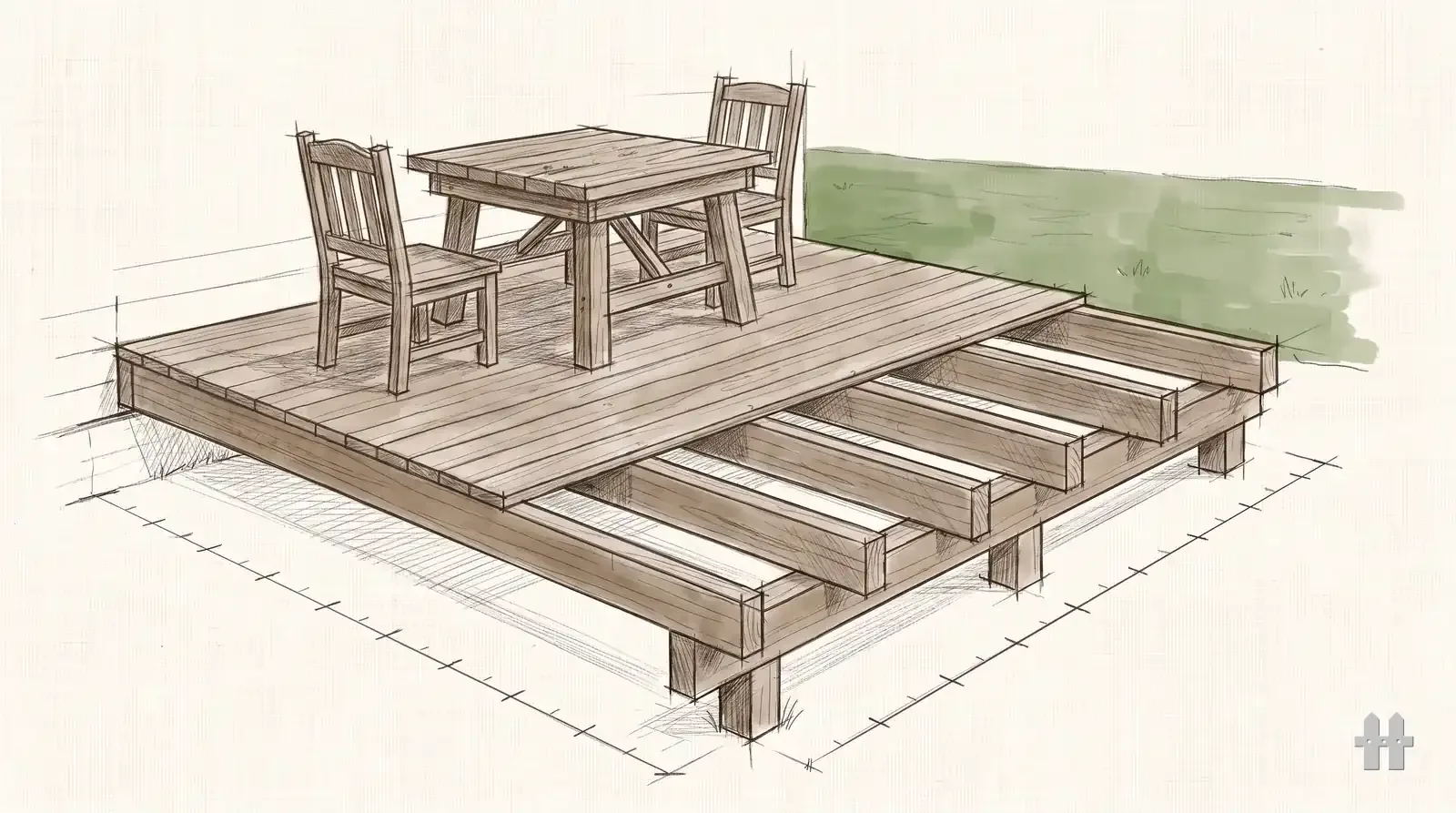
Why the national average is useless
Every page that answers this question opens with a cost per square foot. It is the wrong shape of answer, for three reasons.
The spread is wider than the average is useful. The same deck, same plan, same crew, built in treated pine at ground level and in hardwood at second-storey height, are not two points either side of a mean — they are different projects.
Labour is local and volatile. Contractor rates vary by metro more than most materials do, and both move faster than any article gets updated.
Square footage hides the expensive parts. Stairs, guards, height and access are where the money goes and none of them scale with area. Two 300-square-foot decks can differ by a factor of three.
So this page does not give you a number. It gives you the structure of one, and a tool that turns your own quotes into a total.
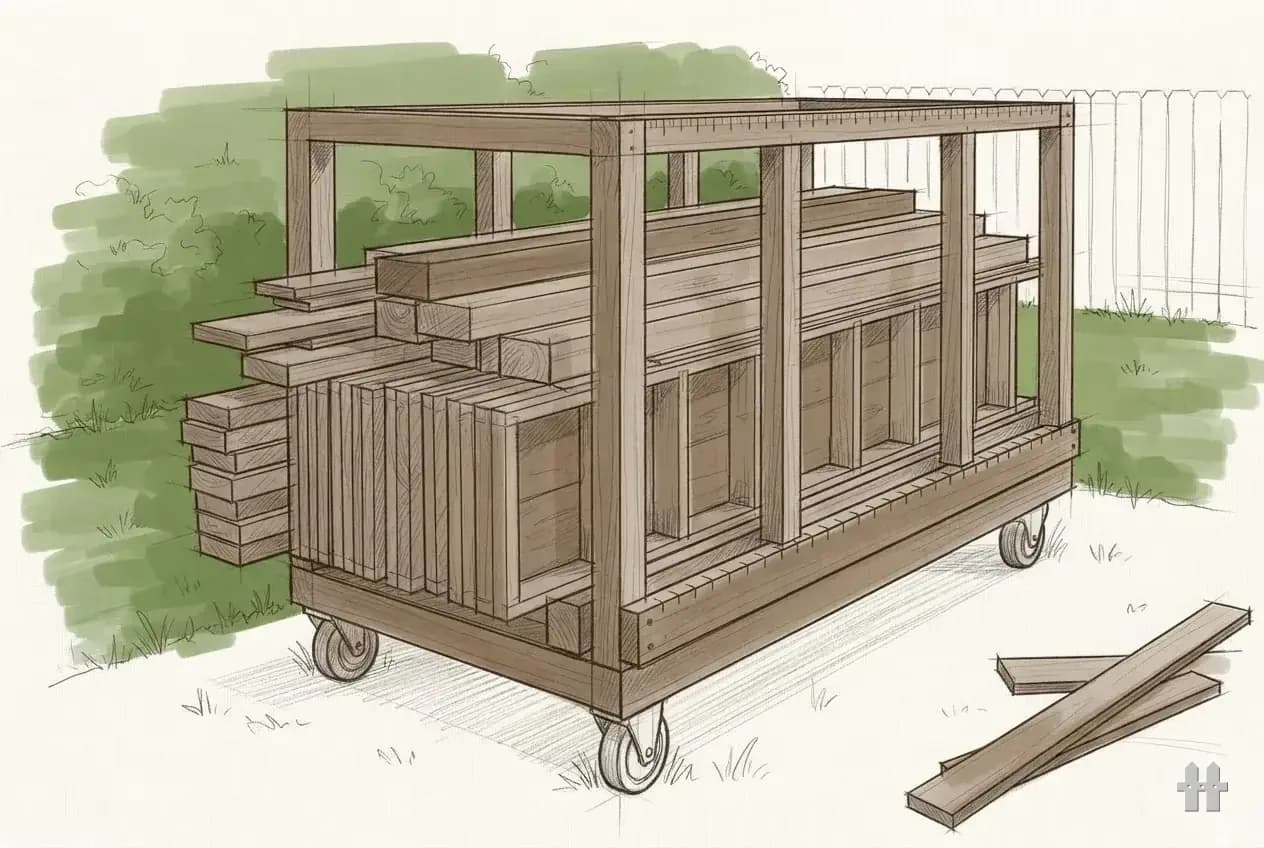
What actually moves the number
| Driver | Why it matters |
|---|---|
| Decking material | Largest single swing. Treated pine, cedar, composite and hardwood are separated by multiples, not percentages — and the frame underneath is the same either way. |
| Height above grade | A ground-level deck needs short posts and no guard. A second-storey deck needs long posts, bracing, a guard all round and a full flight of stairs. The footprint has not changed and the price has doubled. |
| Stairs | The most labour-dense square footage on the job. A long flight with a landing and a handrail can cost more than a comparable area of deck. |
| Shape | Every angle, curve and level change multiplies cuts, adds framing and adds waste. A rectangle is the cheapest deck per square foot that exists. |
| Site access and ground | Wheelbarrowing concrete around a house, digging in rock or clay, or working on a slope — all invisible on a plan and all real days. |
| Railing | Wood, composite, aluminium and cable are far apart, and the guard runs the whole perimeter, so the choice scales with the deck. |
| Demolition | Removing and disposing of an old deck is its own line, and the disposal fee is local. |
Notice how many of these are decisions rather than conditions. Dropping a deck to ground level, squaring off a bay, or moving the stairs to the shortest drop can each take a large bite out of the total without changing the deck you actually use.
Building your own number
- 01Settle the frame. Joist size and spacing, beam, post count. Guessing the frame guesses a third of the material.
- 02Take off the quantities. Joists, beam plies, posts, decking boards, fasteners, concrete, hardware. The board and concrete tools do this arithmetic.
- 03Get real unit prices. Call or check your lumber yard for each line. Twenty minutes here beats any published average, and the numbers are yours.
- 04Add waste. Cutting loss on the decking, extra on any diagonal or picture-frame layout, and a couple of spare boards you will be glad of.
- 05Add the non-lumber lines. Permit fee, concrete, hardware, disposal, delivery, equipment hire, and the stain if it is going on now.
- 06Add labour, or add your weekends. If you are hiring, this is the biggest single line. If you are not, price it anyway so you know what your time is buying.
The deck cost calculator runs this in one place: you supply the unit prices, it supplies the quantities and the arithmetic. Nothing in it is a national average, because there is no useful one to give.
The labour question
Labour is normally the largest line on a contracted deck, and it is not one rate. It covers layout, digging, concrete, framing, decking, guards, stairs, clean-up, and the time spent waiting for inspections. It scales with complexity far more than with area.
Rates are local and move, so the honest instruction is the same as for material: get real numbers from real contractors in your market. A pricing article cannot know what a crew in your county charges this month.
Building it yourself does not remove the labour, it moves it onto your weekends, and it does not remove the tools, the disposal, the delivery or the permit. Price the full job before deciding, then subtract the labour to see what you are actually saving.
Reading three quotes
Get three, and read the scope before the price. Quotes that look far apart are usually describing different decks.
Check that each one names the decking product and grade, the framing species and size, the footing depth and diameter, the guard system, whether stairs and the landing are included, whether the permit and its fee are the contractor's job, whether demolition and disposal of the old deck are in, and what the payment schedule is.
A quote that is one line and a number is not cheaper, it is unspecified — and every unspecified item becomes a change order at the contractor's convenience. The bid template is the shape a good one takes; if you are the contractor, printing that is the fastest way to look like the serious quote in the pile.
Prices move weekly and by region. Enter the unit price your yard quoted you — the defaults are round placeholders, not a market average.
Sources
Nothing here is asserted as a current figure. The numbers on this page are arithmetic or nominal lumber sizes — definitions, not claims.
Filed under Costs, codes & permits — 12 tools, guides and comparisons in this pillar.
Next on the pile
Deck cost calculator
Your unit prices in, a line-by-line total out.
Composite deck cost calculator
Price the composite option against the same frame.
Deck bid template
A printable bid in the same shape.
Composite decking vs wood
The material choice that moves the total most.
How long does a deck last
Cost per year is the number that decides material.