How long does a deck last
Updated 2026-10-18 7 min read
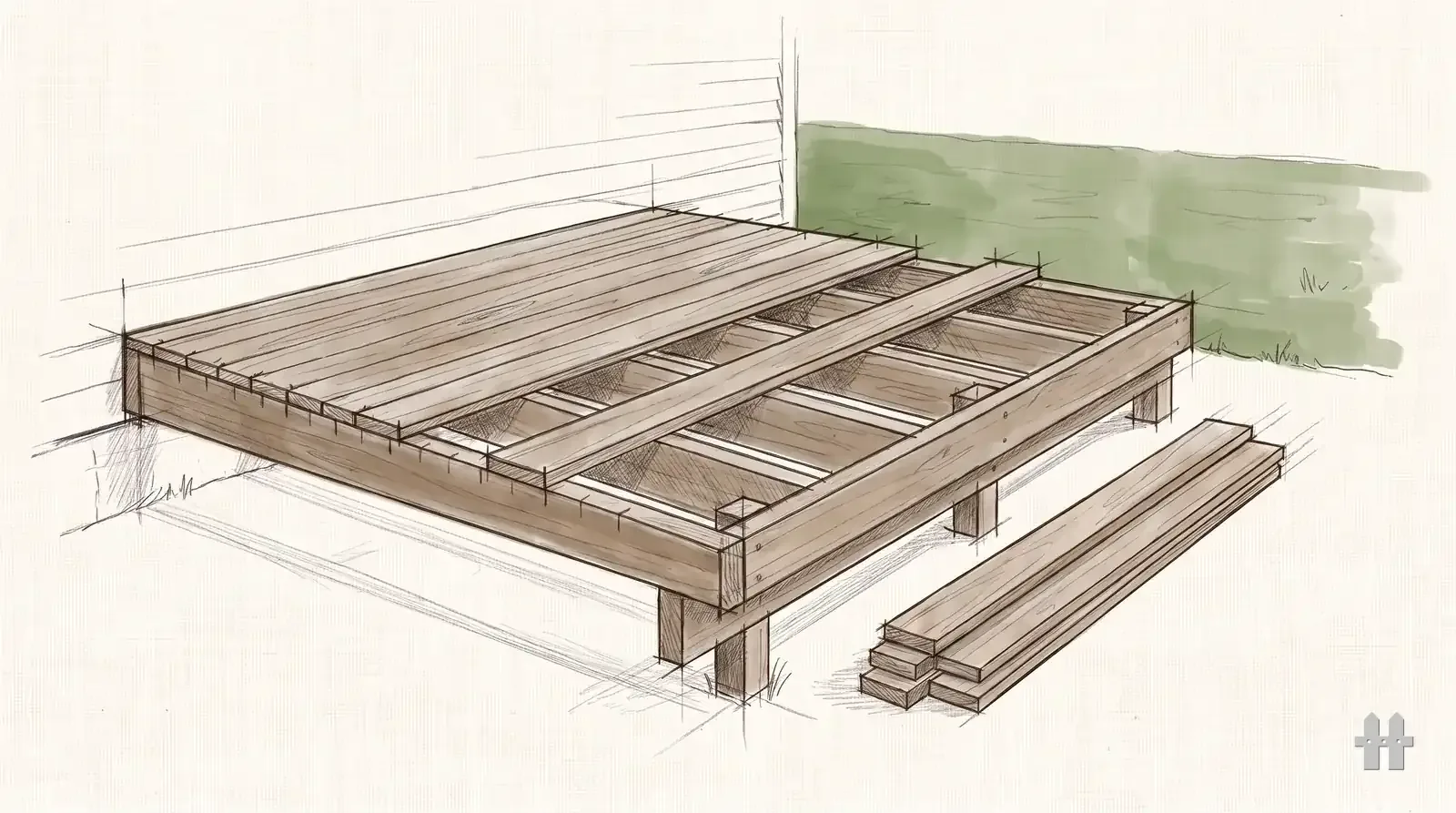
There are two decks, and they age differently
The frame — posts, beam, joists, ledger — is treated lumber under cover of the decking, out of direct sun and mostly out of standing water. The surface — decking boards, guard, stairs — takes the sun, the rain, the furniture and the feet.
The surface almost always goes first, and that is good news: re-decking a sound frame is a fraction of the cost of a new deck. It is also why "how long does a deck last" has no single answer — the two halves are on completely different clocks, and a well-built frame commonly outlives two surfaces.
The six details that kill decks
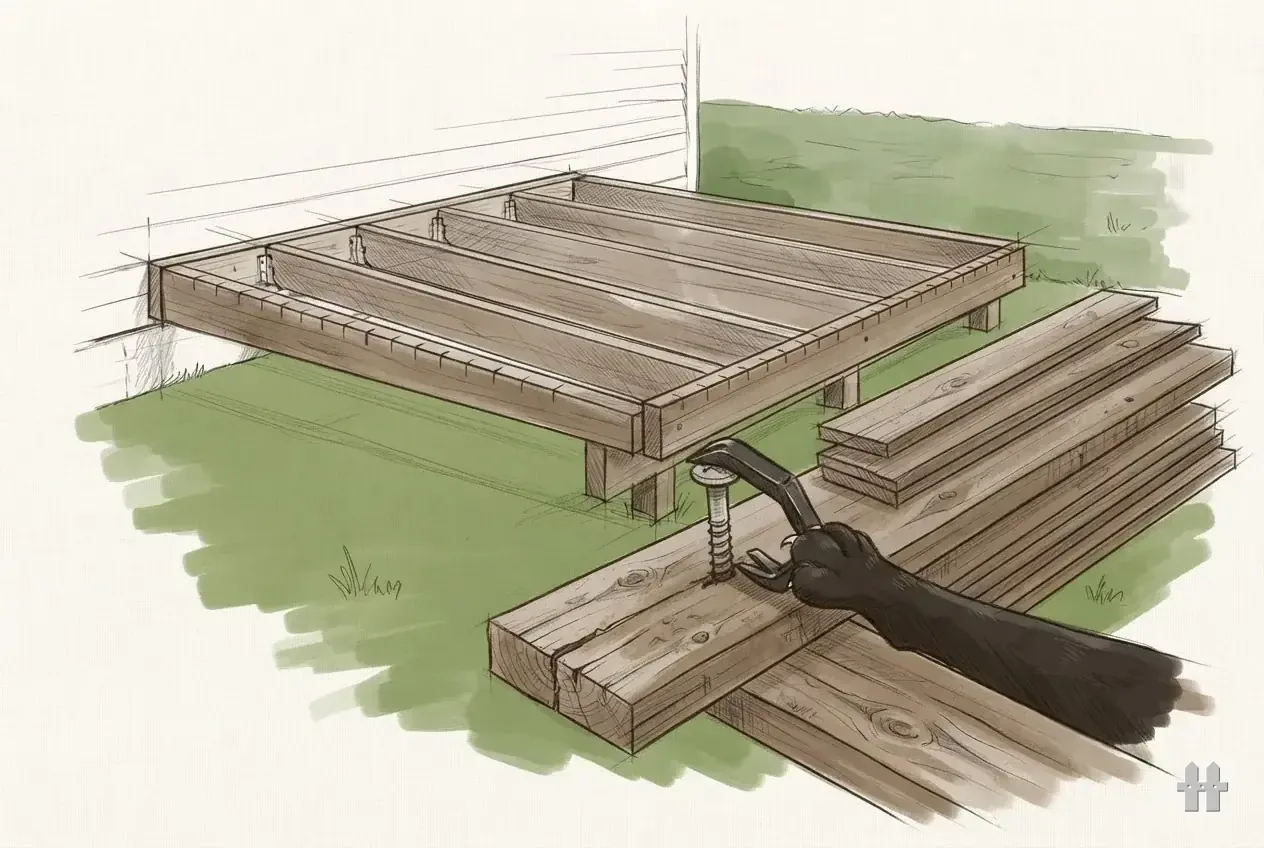
Weathering, splitting and checking retire plenty of deck boards, but rot is what takes the frame with it, and rot needs trapped water. Every one of these is a place where water sits instead of leaving:
| Detail | What happens |
|---|---|
| Post bottoms in soil | Wood buried in a footing stays wet and rots from inside. A post base on top of the pier is the fix, and it has to be done at build time. |
| Board ends | End grain drinks. Unsealed cuts at butt joints and the perimeter are where rot starts on the surface. |
| The ledger | Water behind it rots the house's rim joist, not just the deck. The most expensive failure on the list. |
| Fastener holes | Every screw is a path into the board. Corroded fasteners open the hole up and the surrounding wood goes soft. |
| Where the deck meets anything | Stair stringers on the ground, a rail post through the decking, planters and mats sitting on the boards — anywhere two surfaces trap water between them. |
| Gaps packed with debris | Leaf litter between boards holds a wet sponge against the wood for months. Sweeping the gaps is unglamorous and it works. |
Notice that four of the six are decided at build time and cannot be maintained into existence afterwards. That is the real answer to the question: how long a deck lasts is mostly set in the week it is built.
What material actually changes
Material changes the surface's clock and barely touches the frame's, because the frame is treated lumber regardless of what you walk on.
Treated pine resists decay well and is the standard frame material. As decking it is the shortest-lived aesthetically — it checks, splinters and greys — but it is cheap to replace board by board.
Cedar and redwood are naturally durable in the heartwood, stable, and pleasant underfoot. Sapwood is not durable, and grade matters more than species name.
Composite and PVC do not rot, which removes the surface from the equation entirely. They are not maintenance-free — they stain, they can fade, and the frame under them ages exactly as before. Their failure mode is cosmetic, and a scratched composite board cannot be sanded back the way wood can.
Tropical hardwoods are extremely durable and extremely dense, which makes them slow to install and hard on tools. They also want regular oiling to keep their colour, or they silver like everything else.
The comparison in decking materials compared puts these side by side.
Extending it
At build time, which is where the leverage is: post bases instead of buried posts, sealed cut ends, flashing over the ledger, corrosion-rated hardware throughout, joist tape over the joist tops so fastener holes are not sitting in a puddle, and a frame that drains rather than one that ponds.
Every year: clear the gaps between the boards, clear the leaf litter from under the deck, check that grade and downspouts still carry water away, and look at the post bases and the ledger line. Ten minutes with a torch under the deck once a year finds things five years before they are visible from above.
On its own schedule: clean and recoat the sunny horizontal areas when the water stops beading — see the stain guide.
When to repair and when to replace
Repair when the frame is sound and the problem is on top: soft boards, a wobbly guard, popped fasteners, worn finish. Re-decking a good frame is the best-value job in the whole category.
Replace when the frame itself is going: soft posts at the base, a rotten ledger or a rotten rim joist behind it, footings that have heaved out of line, or a frame built to a standard the current code would not accept. Patching a failing frame spends real money on a deck that still has to come out.
Code requirement
If a probe sinks into a post base or the ledger area feels soft, stop using the deck until it has been looked at. Ledger and post failures are sudden, not gradual.
Sources
Nothing here is asserted as a current figure. The numbers on this page are arithmetic or nominal lumber sizes — definitions, not claims.
Filed under Materials & finishes — 11 tools, guides and comparisons in this pillar.
Next on the pile
Deck stain guide
The maintenance half of the answer.
Deck ledger and flashing
The most expensive failure on the list.
Decking materials compared
Durability by material, honestly framed.
How much does a deck cost
Cost per year is the number that matters.
Deck replacement cost calculator
Price repair, resurface and rebuild side by side.