Deck footing depth
Updated 2026-10-18 8 min read
Why depth is the number that matters
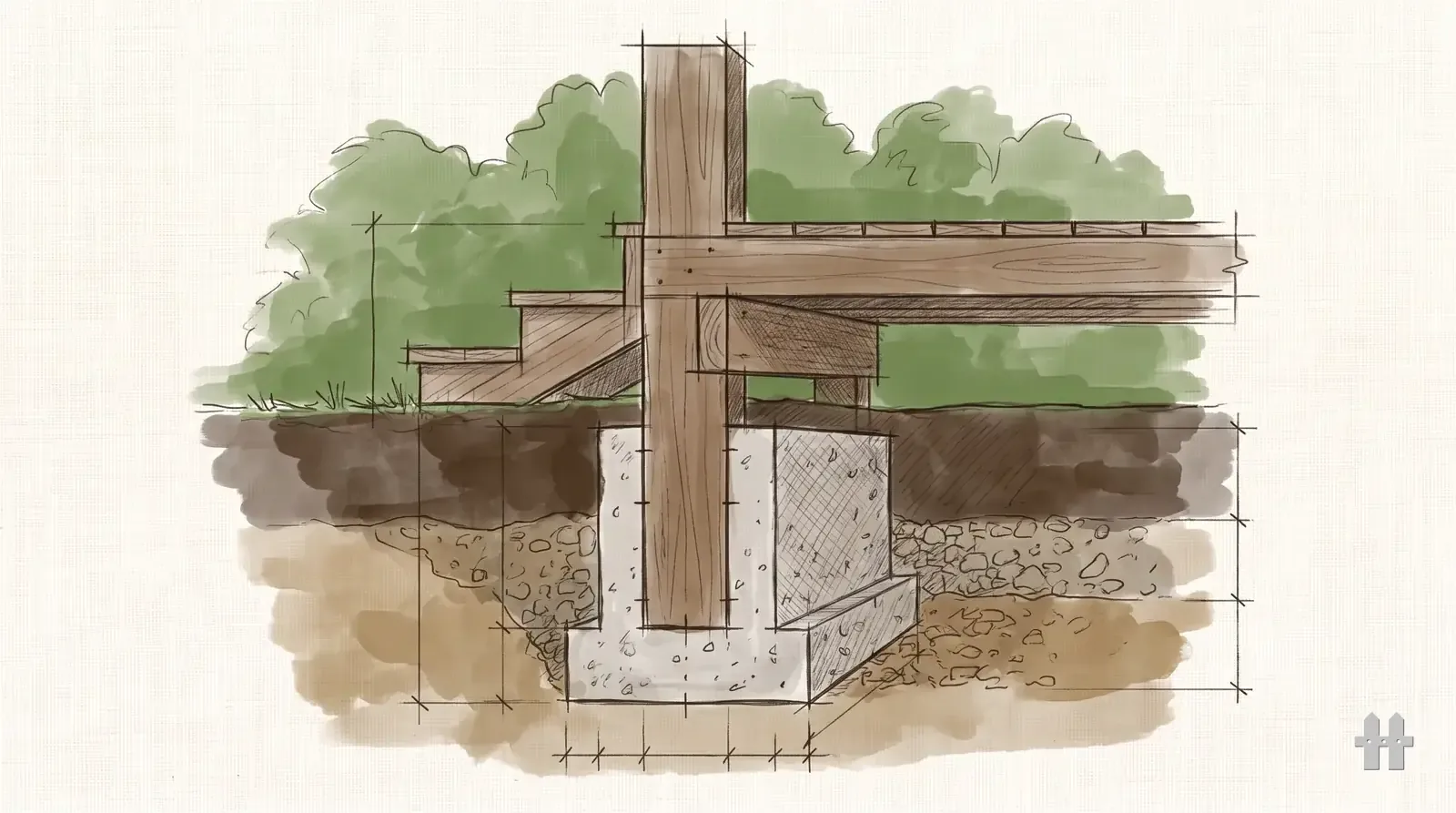
A deck footing has two jobs and they are separate. Width spreads the load so the soil does not sink — that is the tributary-area calculation, and it is what the footing size tool answers. Depth gets the bearing surface below the ground that freezes. Get the width wrong and the deck settles. Get the depth wrong and the deck moves up and down every winter, which is worse, because it is not one failure — it is a ratchet.
Two numbers stack. The 2021 IRC sets a floor everywhere: deck footings are placed not less than 12 inches below undisturbed ground (§ R507.3.2, the same floor § R403.1.4 sets for every exterior footing). On top of that, where the deck is attached to a frost-protected house, the footing goes below the frost line published for your jurisdiction in Table R301.2 (§ R507.3.3). The deeper of the two governs, and in much of the country that is the frost line by a wide margin.
Water expands as it freezes. Soil holding water expands with it, and a footing sitting inside that layer gets lifted. Come spring the ground relaxes but the footing does not fully return, so it rises a little each year. The ledger stays where it is because it is bolted to a house on deep foundations, and the deck slowly tears itself away from the wall.
Finding your frost depth
There is no national number and any page that gives you one is guessing. Frost depth is set locally, and it varies enormously — a warm coastal county may have no frost requirement at all while a county two states north wants several feet.
Get yours from one of these, in this order:
- 01Your building department's residential handout. Most publish a one-page deck sheet with the local frost depth printed on it. This is the number the inspector will use, so it is the only one that counts.
- 02The local amendments to the adopted code. The model code leaves frost depth to the jurisdiction precisely because it cannot be written nationally.
- 03Ask the counter, and write down who told you. A five-minute phone call beats re-digging twelve holes.
A neighbour's deck is not evidence. It may predate the current requirement, it may never have been permitted, and it may be the one heaving.
What the footing has to bear on
Depth alone is not enough — the footing has to land on undisturbed soilor on properly compacted fill. If your hole passes through backfill from the house excavation, you keep going until you are into native ground, whatever the frost number says. Loose fill compresses under load no matter how deep it sits.
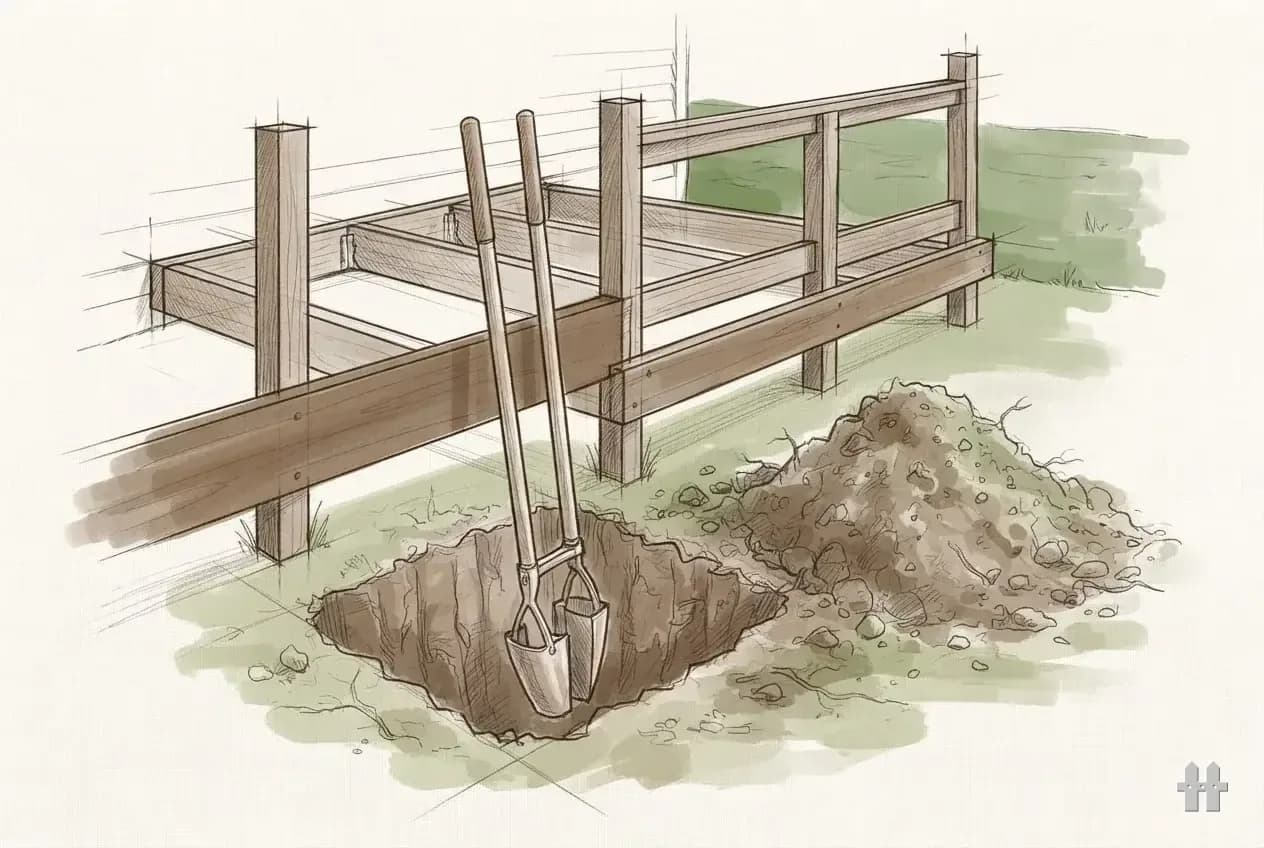
Bottom the hole flat, not conical. A sloped bottom concentrates the load on a point and lets the pier tip. Clear the loose spoil out before the concrete goes in; a few inches of crumbs at the base is a few inches of settlement waiting to happen.
The four expensive mistakes
Measuring from the wrong surface. Depth is to the bottom bearing surface, measured from finished grade — not from the top of a mound of spoil.
Backfilling with the spoil and calling it compacted. It is not, and the pier will settle into it.
Setting the post in the concrete. Wood buried in a pier stays wet and rots from the inside. Use a post base anchored to the top of the pier and keep the timber out of the ground.
Digging every hole a different depth. Differential movement is what racks a frame. Consistency across all the piers matters as much as the number itself.
The inspection
In most jurisdictions the holes are inspected open, before concrete. That is the whole point — nobody can verify a depth you have already filled. Book it, wait for it, and do not pour ahead of it however good the weather looks. Pouring early is the one mistake on this page that can mean digging the deck back out.
Have the layout square and the holes clean when the inspector arrives — setting them out covers that. The full inspection sequence is in permit requirements.
Code requirement
Frost depth, bearing capacity and inspection sequence are all local. Your jurisdiction may amend the model code or adopt a different edition. Confirm with your building department before you cut.
Once the depth is passed, turn hole size and count into bags with the concrete calculator for deck footings, and follow the pour order in how to build deck footings.
Sources
Filed under Deck framing & structure — 19 tools, guides and comparisons in this pillar.
Next on the pile
Deck footing size calculator
Diameter from tributary area and soil bearing.
Footing spacing and layout
Setting piers out square with string and batter boards.
Deck permit requirements
The plan set and the inspections, in order.
How deep should fence posts be
The same frost question, a different structure.
How to build deck footings
The whole build, once the depth is known.